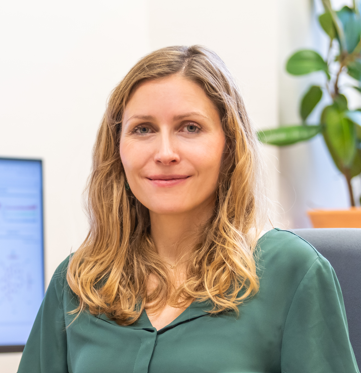
About the Speaker
Sandy Engelhardt, PhD is Full Professor and Head of the Institute for Artificial Intelligence in Cardiovascular Medicine at Heidelberg University Hospital and Medical Faculty of Heidelberg University. The main research goal of her group is to leverage multimodal AI and Generative AI in image processing for cardiovascular precision medicine and to support surgeons using computer-assisted tools. Her dissertation won the BVM-Award 2017 for the best PhD thesis on the German Image Processing Community. She is responsible for the multicentric Federated Learning Initiative in the German Center for Cardiovascular Research (https://fed-learning.org/) and is speaker of the MultidimensionAI consortium funded by the Carl Zeiss Foundation by 5 Mio €. Furthermore, she is Program Chair of this year’s ESC Digital and AI Summit 2026 taking place in Basel organized by the European Society of Cardiology.
Talk Abstract
Recent advances in artificial intelligence are reshaping the landscape of cardiovascular medicine, enabling data-driven, privacy-preserving, and clinically scalable solutions. In the first part of this talk, we explore how generative AI can be leveraged for cardiac medical image synthesis and data imputation. Diffusion models enable the realistic generation of high-fidelity cardiac images, supporting tasks such as missing modality reconstruction, and rare pathology augmentation. However, evaluation paradigms for these type of data are severely underdeveloped. In the second part of the talk, we will place emphasis on multicentric distributed learning across clinical institutions through federated approaches, including the FLOTO framework, enabling collaborative model training without centralized data sharing while maintaining robustness and generalizability. The last part of the talk focuses on Vision Large Language Models (Vision LLMs) for surgical data science. By combining visual perception with language reasoning, these models open new avenues for structured surgical workflow analysis, intraoperative decision support, automated report generation, and multimodal knowledge integration. We discuss how Vision LLMs can bridge imaging, video, and textual clinical data to support intelligent operating rooms and data-driven cardiovascular interventions. Together, generative AI, federated learning, and multimodal foundation models represent a converging paradigm toward scalable, privacy-aware, and intelligent cardiovascular care systems.
We are looking forward to the talk!